
Getting Started with BMad v6 Alpha
Build software faster using AI-powered workflows with specialized agents that guide you through planning, architecture, and implementation.
What You’ll Learn
Section titled “What You’ll Learn”- Install and initialize BMad Method for a new project
- Choose the right planning track for your project size
- Progress through phases from requirements to working code
- Use agents and workflows effectively
Understanding BMad
Section titled “Understanding BMad”BMad helps you build software through guided workflows with specialized AI agents. The process follows four phases:
| Phase | Name | What Happens |
|---|---|---|
| 1 | Analysis | Brainstorming, research, product brief (optional) |
| 2 | Planning | Create requirements (PRD or tech-spec) |
| 3 | Solutioning | Design architecture (BMad Method/Enterprise only) |
| 4 | Implementation | Build epic by epic, story by story |
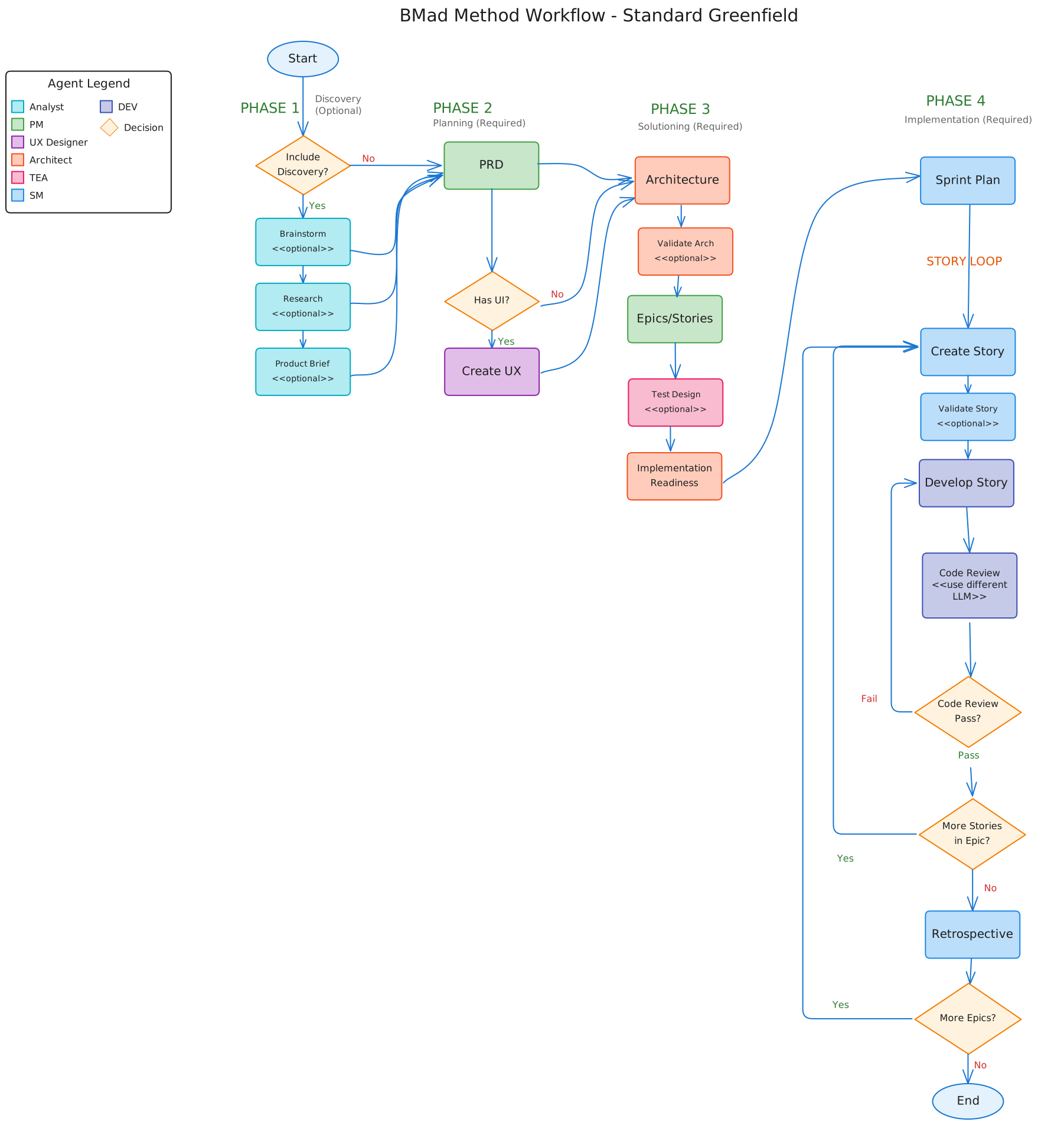
Complete visual flowchart showing all phases, workflows, and agents for the standard greenfield track.
Based on your project’s complexity, BMad offers three planning tracks:
| Track | Best For | Documents Created |
|---|---|---|
| Quick Flow | Bug fixes, simple features, clear scope (1-15 stories) | Tech-spec only |
| BMad Method | Products, platforms, complex features (10-50+ stories) | PRD + Architecture + UX |
| Enterprise | Compliance, multi-tenant systems (30+ stories) | PRD + Architecture + Security + DevOps |
Installation
Section titled “Installation”Open a terminal in your project directory and run:
npx bmad-method@alpha installThe interactive installer guides you through setup and creates a _bmad/ folder with all agents and workflows.
Verify your installation:
your-project/├── _bmad/│ ├── bmm/ # Method module│ │ ├── agents/ # Agent files│ │ ├── workflows/ # Workflow files│ │ └── config.yaml # Module config│ └── core/ # Core utilities├── _bmad-output/ # Generated artifacts (created later)└── .claude/ # IDE configuration (if using Claude Code)Step 1: Initialize Your Project
Section titled “Step 1: Initialize Your Project”Load the Analyst agent in your IDE, wait for the menu, then run workflow-init.
The workflow asks you to describe your project, whether it’s new or existing, and the general complexity. Based on your description, it recommends a planning track.
Once you confirm, the workflow creates bmm-workflow-status.yaml to track your progress through all phases.
Step 2: Create Your Plan
Section titled “Step 2: Create Your Plan”After initialization, work through phases 1-3. Use fresh chats for each workflow.
Phase 1: Analysis (Optional)
Section titled “Phase 1: Analysis (Optional)”All workflows in this phase are optional:
- brainstorm-project — Guided ideation
- research — Market and technical research
- product-brief — Recommended foundation document
Phase 2: Planning (Required)
Section titled “Phase 2: Planning (Required)”For BMad Method and Enterprise tracks:
- Load the PM agent in a new chat
- Run the PRD workflow:
*prd - Output:
PRD.md
For Quick Flow track:
- Use
tech-specinstead of PRD, then skip to implementation
Phase 3: Solutioning (BMad Method/Enterprise)
Section titled “Phase 3: Solutioning (BMad Method/Enterprise)”Create Architecture
- Load the Architect agent in a new chat
- Run
create-architecture - Output: Architecture document with technical decisions
Create Epics and Stories
- Load the PM agent in a new chat
- Run
create-epics-and-stories - The workflow uses both PRD and Architecture to create technically-informed stories
Implementation Readiness Check (Highly Recommended)
- Load the Architect agent in a new chat
- Run
implementation-readiness - Validates cohesion across all planning documents
Step 3: Build Your Project
Section titled “Step 3: Build Your Project”Once planning is complete, move to implementation. Each workflow should run in a fresh chat.
Initialize Sprint Planning
Section titled “Initialize Sprint Planning”Load the SM agent and run sprint-planning. This creates sprint-status.yaml to track all epics and stories.
The Build Cycle
Section titled “The Build Cycle”For each story, repeat this cycle with fresh chats:
| Step | Agent | Workflow | Purpose |
|---|---|---|---|
| 1 | SM | create-story | Create story file from epic |
| 2 | DEV | dev-story | Implement the story |
| 3 | TEA | automate | Generate guardrail tests (optional) |
| 4 | DEV | code-review | Quality validation (recommended) |
After completing all stories in an epic, load the SM agent and run retrospective.
What You’ve Accomplished
Section titled “What You’ve Accomplished”You’ve learned the foundation of building with BMad:
- Installed BMad and configured it for your IDE
- Initialized a project with your chosen planning track
- Created planning documents (PRD, Architecture, Epics & Stories)
- Understood the build cycle for implementation
Your project now has:
your-project/├── _bmad/ # BMad configuration├── _bmad-output/│ ├── PRD.md # Your requirements document│ ├── architecture.md # Technical decisions│ ├── epics/ # Epic and story files│ ├── bmm-workflow-status.yaml # Phase progress tracking│ └── sprint-status.yaml # Sprint tracking└── ...Quick Reference
Section titled “Quick Reference”| Command | Agent | Purpose |
|---|---|---|
*workflow-init | Analyst | Initialize a new project |
*workflow-status | Any | Check progress and next steps |
*prd | PM | Create Product Requirements Document |
*create-architecture | Architect | Create architecture document |
*create-epics-and-stories | PM | Break down PRD into epics |
*implementation-readiness | Architect | Validate planning cohesion |
*sprint-planning | SM | Initialize sprint tracking |
*create-story | SM | Create a story file |
*dev-story | DEV | Implement a story |
*code-review | DEV | Review implemented code |
Common Questions
Section titled “Common Questions”Do I always need architecture? Only for BMad Method and Enterprise tracks. Quick Flow skips from tech-spec to implementation.
Can I change my plan later?
Yes. The SM agent has a correct-course workflow for handling scope changes.
What if I want to brainstorm first?
Load the Analyst agent and run brainstorm-project before workflow-init.
Can I skip workflow-init and workflow-status? Yes, once you learn the flow. Use the Quick Reference to go directly to needed workflows.
Getting Help
Section titled “Getting Help”- During workflows — Agents guide you with questions and explanations
- Community — Discord (#bmad-method-help, #report-bugs-and-issues)
- Documentation — BMM Workflow Reference
- Video tutorials — BMad Code YouTube
Key Takeaways
Section titled “Key Takeaways”Ready to start? Install BMad, load the Analyst, run workflow-init, and let the agents guide you.